Friday, December 13, 2024

EOTO 2 Reactions

During the presentations for the EOTO 2 assignment, I learned a lot of new information. I found these to be the most interesting to me. 

Whistleblowers:

Whistleblowers are people who report information to people who do not know what is going on. One of the most famous whistleblowers they talked about was Edward Snowden. Snowden was an NSA intelligence contractor who revealed how the NSA was listening to people without their consent. He revealed thousands of classified documents about this, and many were shocked when it came out. Many people debate whether he is a traitor or a hero. He opened the eyes of many people on how the government is mass surveilling U.S. citizens, good or bad. 

Mainstream Media:

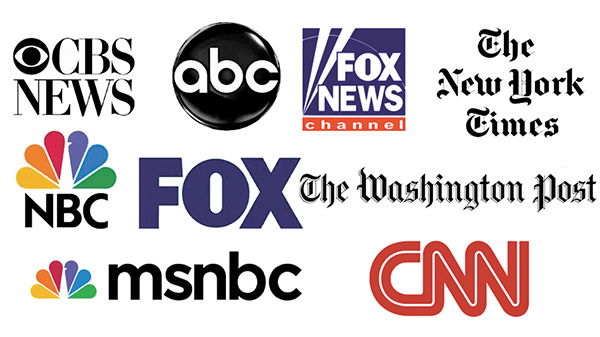
Another thing I found interesting was mainstream media. For the most part, only a couple of media channels have a significant presence. Everyone gets their news from FOX, ABC, NBC, CNN, CBS, or a few newspapers like the New York Times. These channels control what is being broadcast and what news stories are being told. The problem with most of these is they need to be more neutral. When we look at FOX and CNN, many people associate FOX with the far right and CNN with the far left. This may be the case, but these other channels could be more neutral. 

Gatekeeping:

Going off of mainstream media, gatekeeping also caught my attention. Gatekeeping is the process by which information gets published or broadcast to the public. There are hundreds of news stories a day. However, organizations and individuals must pick the ones they think will get the most publicity or align with their organization. Due to this, news organizations can influence public opinion through the stories they publish. You see this a lot during the election. Media companies try to persuade people to vote for one side and will put stories about the other candidates. 


Deep Fakes: 

Lastly, something that I found interesting and scary was deepfakes. Deepfakes are pictures of people that are photoshopped but look identical to the person. This is very scary because people are able to make images of people doing stuff they never did. You see this a lot with social media influencers and celebrities. To the naked eye, it looks exactly like them; however, it is not. Deepfakes are not only facial features but can also be used in voice recordings. This can be harmful because if scammers get their hands on people's voices, they will have an easier time scamming people and taking their money. Deepfakes are also used in many cyberbullying cases. People will create voice recordings of people saying something they never said. 

Overall, all of the EOTO presentations were good. However, these were the ones that stood out to me the most. We need to be careful in what we read and see. Not everything is accurate, and we must constantly remind ourselves to fact-check what we read. We need to look at multiple different media channels, so we're more educated on the topic and not be persuaded by one organization. 

Monday, December 9, 2024

Technology Pro's and Con's and How it can Destroy Society


Digital technology is a double-edged sword. There are many beneficial aspects of technology; however, there are also many non-beneficial aspects as well. For my generation (Gen Z), digital technology has been around for as long as I can remember. My generation with technology was a little different in the fact that we were not glued to iPads like the generation now (Gen Alpha) is. In my experience, whenever I go out to a restaurant, I always see kids either on their iPads or parent’s phones, watching videos or playing games.

Pros:

I feel older generations have this notion that technology is ruining the world. In some aspects, yes, but in others, no. Technology has played a massive role in developing new medical equipment and medications. It has also increased life expectancy and reduced child mortality. Another big thing it has helped is finding cures to diseases people would have never thought would be cureable.Cons: 

Technology has also made our lives a lot easier. Technology has allowed us to send messages anywhere in the world in seconds. It has also allowed us to become more connected than ever and be able to meet new people all over the world. Another thing that has allowed us to do is get news instantly. Before this, you had to wait for the evening news to broadcast the latest story or the newspaper to come the next morning. Lastly, technology has made our lives a lot easier by finding information. Nowadays, if you don’t know the answer to a question, you go straight to Google and look up the answer. 

Con's

Now, as good as all of that sounds, technology has downfalls. I believe technology is ruining the way we communicate with each other. Many people are glued to their phones and only text people. I feel that it hurts society as a whole because people will soon be unable to talk to others. This will cause huge mental health concerns because people are not going to be able to talk about their feelings or be able to sustain relationships. On the topic of mental health, cyberbullying is at an all-time high. Many people are being bullied on social media with pictures or posts about other people. 

AI has become a little too real. The people who created it have taught the AI to be just like us. This causes people to talk to AI, believing the AI bot is real after some time. There is a reason why ChatGPT only allows a certain number of submissions before it resets. Lastly, AI is taking over many jobs. AI is able to do tasks more accurately and at a lower cost than employees. Due to this, many companies have decided to hire humans instead of AI. In the short term, this might not sound as bad, but in the long term, this could be devastating for the economy, and people will be jobless. 


It sounds like I don’t like technology, but that’s not true. I use technology all the time. I use AI to answer emails or ask questions about something we’re learning. I use Instagram, Snapchat, Twitter, and TikTok every day. I know it sounds terrible, but that is usually how I receive my news. I have been told a million times to not believe everything you read on the internet, but I will admit I believe many things I read. After taking this class and reading about how people write misleading and misinformation all the time, I see myself double-checking stories I read on Instagram and putting them into Google to see if multiple news agencies covered the topic. There is no escaping technology. 97.1% of U.S population uses technology. Technology is only going to improve. That’s why we need to be careful in how we use it; we need to educate kids at a young age on how to use technology responsibly and limit the usage we allow people to use it. 


Saturday, October 5, 2024

Blog Post 10

EOTO 2:

For my project, I talked about the social credit score. The social credit score "is a national system that evaluates the trustworthiness of individuals, businesses, and government entities." In other words, this is a score you receive based on how you act. The social credit score began in 2009. Local governments were the first to launch the first pilot testing. After some time in 2015 they piloted companies to use the social credit score as well. They did this to help combat the Ponzi schemes and corruption companies involved. After this, they implemented it in 12 cities, including Beijing. Then, finally, in 2020, all citizens of China had to sign up for the social credit system. 


Every citizen starts with a score of 1,000 and is graded on how they act. The structure is broken down into letter grades. The letter grades are followed by A (960 - 1,000 points), B (850 - 955), C (840 - 600), and D (600 - 0). People's scores fluctuate depending on their behavior. If you're being a good citizen, throwing out your garbage, speaking good about the government, not committing crimes, etc., your score will increase. If you're committing crimes, talking bad about the government, jaywalking, playing too many video games, etc., your score will decrease. 

Having a good score can help people with many things, like receiving tax breaks, waived rent deposits, work promotions, and cheaper public transportation. People with bad scores, also known as "blacklisted," are unable to receive loans or travel and have the potential for public shaming. 

China has implemented AI to track people. When you sign up for the program, they take pictures of you and scan your face. Once in the system, the 200 million surveillance cameras will watch people and see if someone is doing something bad. 


In the U.S., we saw some sort of this with the Twitter Files. The Twitter files were leaked by Elon Musk from December 2022 to March 2023. These files showed how the government was aiding Twitter to push tweets that would fit what the government wanted and suppress the dissenting tweets even if true. During the COVID pandemic, the government wanted Twitter to push the vaccine. Anyone who tweeted against the vaccine was deemed as not trustworthy. Many medical experts said the vaccine was good, and many of those tweets either got deleted or flagged. Lastly, many people also got banned from Twitter based on their political stance. It got really bad when Twitter banned former President Donald Trump. Many people thought this was ridiculous and were upset with Twitter. Overall, after looking at all of this, a big question that follows is whether Twitter is limiting American's First Amendment right of freedom of speech and expression.


Lastly, another big controversy going on is debanking. John Eastman was one of Trump's attorneys who was debanked by both Bank of America and USAA. They shut down his accounts for no reason. This also happened with the National Committee for Religious Freedom (NCRF), which is a nonprofit advocacy group that defends everyone in America to live their faith freely. J.P Morgan Chase closed their accounts because it would not disclose a list of donors who contributed 10 percent or more to its operating budget. 


Overall, politics aside, they're clearly trying to limit the right side. They're taking money away from attorneys who defended Trump and deleted Trump's Twitter because they do not like him. You may not like someone but that does not give companies the right to close their bank accounts and delete people on platforms who are expressing their freedom of speech. 

Wednesday, October 2, 2024

Blog Post 9

Anti-War:

War has been going on for a long time, and many humans do not like it because it's devastating. However, many countries like the U.S. benefit economically. Many men going away for war must leave their jobs, which ultimately increases employment for people currently unemployed. Another thing that benefits the U.S. is our technological advancement in the U.S. military; many countries buy our arsenal and will want to be well equipped while the U.S. is at war. Since we also will need more arsenal because we're in a war, this will create more jobs. With the growth of military supplies being produced, the increase in gross domestic products as well. Lastly, war is constantly changing so technological progress and wartime can lead to new technologies that will be used in other industries. For example, the U.S. experienced technological progress during all of its wars and continues to grow even not in war. 

For some reason, the U.S. always has to get involved in every global conflict. We believe that every country should be like us, and those who aren't should change. Another thing we love is holding the most power we can. For example, the Russia and Ukraine war is all about territory for the U.S. We want to have weapons near all of our enemies in case something bad happens. Another thing we need is natural resources. We stayed in the Middle East way longer than we needed to. However, they're the largest producers of oil. The U.S. needs oil to survive, and the cheapest way they could get that is through the Middle East. 


Overall, no one likes war because it is destructive. Many people die, and many people get hurt. Everyone thinks we should be able to live in a world where there is peace; however, that will most likely never happen. In order to strive as a nation, you sometimes have to do things that may not be right, whether that be staying in a war way longer to get access to natural resources or helping fund a war to keep allies close to our enemies. 


Blog Post 8

Diffusion of Innovations:

 The diffusion of innovation is divided into six categories: Pioneers (these are the people who are the first to use the product, usually selected people), Early Adopters (these would be people or companies who invest in the company), Early Majority (these people would be one of the first people to sign up when it goes public), Late Majority (these people are the common people who are not that into technology and up to date usually get the product once it's been out for awhile) Loggards (are people who do not use the product or are very late to join) Lastly, the Longtail (these would be people who use the product or service even though many people do not use it anymore).

   
 When looking at the diffusion of innovations, I immediately thought of Facebook. Facebook was launched in 2004. When it first came out, it was only available to Harvard college students. The people who signed up during this time would be known as the pioneers. After some time and the success of the platform, PayPal invested $500,000 into Facebook for 10% of the company. These would be considered to be the early adopters because they were the first to invest in the company. Facebook then shifted its focus to other colleges and universities. They allowed any students with a .edu email to sign up for facebook. In 2006, they opened their platform to everyone 13 years and older with a valid email to sign up. This allowed for the growth of the company, ultimately resulting in many more users joining. Many of these users who joined would be categorized as the early majority. 


Since Facebook was becoming very popular, many older people and people who did not join in the beginning also started to join. They realized that Facebook would not be going anywhere and that it was better to start using it now, or they would be left behind. This group of people would be known as the late majority. Loggards are special people because they have either never signed up for Facebook or have signed up very late compared to the rest of the world. Lastly, you have the longtail group. These people will be using Facebook forever; they will either have to shut down Facebook completely or until they die. 

Facebook is not the only company that has experienced this. Many other very successful companies have also gone through the same thing. Apple is a great example of this. Before the iPhone came out, many people either had a Motorolla or a BlackBerry. It took people a long time to switch from Blackberry to iPhone. I remember my mom got the first iPhone and then switched back to Blackberry and then to the iPhone later. Today, there are only two real phones that people use today. That would be Android and Apple. 

I think people are sucked into getting these because that is what everyone has. My grandpa had a flip phone for the longest time, but my aunt bought him an iPhone when it broke. He hated it because he didn't know how to use it or cared how to use it. To this day, he still has no idea how to use it and never charges it. I think Apple really secured the younger generation with iMessage. There are many memes of people who have the green bubble and how they are"broke" and should have an iPhone. I think people only get the phone because they do not want to be different. 

Friday, September 20, 2024

Blog Post 7

 Living in the Age of AI:


    The use of AI has increased dramatically in the last couple of years. I first learned about it two years ago. Someone showed me what ChatGPT and it has helped me tremendously with writing emails and answering questions I don't know. AI is super beneficial to many people and many businesses. However, it will affect many people because AI is taking over jobs. 

    AI has many pros and cons. For starters, many people who have helped invent and create their own AI platforms have spoken out, saying they have regretted doing so. Geoffrey Hinton, the "godfather of AI," has spoken out, saying AI has many dangers. He believes AI will become more intelligent than humans and could possibly wipe out human civilization. What scares me is how AI could potentially "rule" the world. Some fake social media accounts are run by AI bots that people read and believe. God forbid, but if one of these fake social media accounts with a decent following posts something like Russia just launched a nuclear weapon at the United States, it would scare many people. Another thing AI has been doing in the past couple of years is giving false information about political candidates. This can interfere with elections and possibly sway the entire election. 

    AI is not all bad, though. AI is used in many fields like healthcare, production, and much more. AI can do tasks for companies much quicker and more accurately than humans. I know many people in the workforce now who use AI to make their lives way easier. For instance, one of my friends works in the financial sector, and sometimes they have to code things. He will write me this code, and the AI will correctly give him the code he needs.

    Many countries are trying to create AI-enhancing military weapons. This would create a new form of warfare. In recent years, there have been many more cyberattacks. Many believe these cyberattacks are made with the help of AI. This poses a major risk for many people because it can affect everyone and will be more available to those who want to carry out these attacks. 


 Overall, AI is a very sophisticated piece of technology that can do more harm than good if we allow it. As a society, we must be careful about how we use it. Although it has many pros, it also has many cons. 

Tuesday, September 17, 2024

Blog Post 6

EOTO Presentation Reflection:

During the presentations, I learned a lot about different inventions that have revolutionized the world today. The most interesting ones I learned about were Facebook and the printing press. These technologies have greatly impacted society, and their innovations are still used today.


The Printing Press:

The printing press is one of the most influential inventions of all time. Johannes Gutenberg invented it around 1440 in Germany. This device allowed many authors and news outlets to produce multiple copies of their work quickly and cheaply. This printing press could produce up to 3,600 pages per workday. This was insane because before, they had to handwrite everything they wanted to be published. This invention is still used today to produce books, newspapers, magazines, and any written work. Even though there has been a decline in physical copies, this invention is still very important.


Facebook: 

Facebook is one of the most influential companies in the 21st century. It was founded in 2004 by Mark Zuckerberg, Eduardo Severin, Andrew Moskovitz, and Chris Hughes while they were students at Harvard. I honestly did not know who these other people were; I thought Facebook was only created by Mark Zuckerberg. Facebook changed the way we communicate with others. It was one of the first social media platforms to connect people from around the world. Even though Facebook has many positive aspects, it also has many negative aspects. Facebook has had negative impacts on people's mental health, privacy, misinformation, and much more. Something I found overall, Facebook has changed the way we communicate with each other and has helped people stay connected. 

Blog Post 5

TED TALK:


After watching the Ted Talks, it is safe to say anything we do is being watched, tracked, and stored. Many people have this notion that the internet is somewhat safe and that these companies protect our data; however, that is not the case. They literally take every piece of data they can and sell it to other companies. 


In the first Ted Talk with Juan Enriquez, he talks about digital tattoos. Digital tattoos are information about the users. For example, with Facebook, everything we post or say (even if deleted) will be forever on its servers. Another crazy thing he talks about is Face.com. Before this Ted Talk I had no idea what this was, but after he explained it, I realized how much information these companies sell. Face.com in 2011 had around 18 billion faces. It was ultimately bought out from Facebook in 2012. However, Face.com was able to give people records of people with just a picture of their face. People can get so much information on other people without even knowing or talking to them. 

In the second Ted Talk with Catherine Crump, she discusses how police and the government can track you. They can do this via automatic license plate readers, GPS trackers in vehicles, and cameras on the side of the road. These devices can determine where you travel frequently, your daily driving routes, and basically anywhere you go. The intent of license plate readers is to determine whether a car has been stolen, if your registration has expired, etc. Realistically, you would think it just checks the license plate and gets deleted. However, that is not the case. The police departments keep all the data just in case they need it for the future. They have millions of innocent people's data, just in case. After hearing about this, I wonder how many photos of my license plates they have. 

Due to the controversy surrounding this, some states are taking action. In North Carolina, there is a law that limits the retention of license plate data to 90 days. This may sound like a step in the right direction. However, you probably drive past a license plate reader every day, whether that be on the side of the road or mounted on the top of a police car. 


In the last Ted Talk with Christopher Soghoian, he discusses how the government has so much access to our phone calls and how the telephone companies have provided them with wiretapping assistance. When the government first started listening to our phone calls, they were done manually. However, as technology increased, calls were then recorded to tapes and drives so they could be reviewed. This is no secret. Many people know the saying "Big Brother is always watching," but I don't think they realize how much they're watching. Something that kind of freaked me out and did not put much thought into was how other governments have the same technology and can be listening to our conversations as well. 

On the other hand, companies like Apple and WhatsApp have created sophisticated encryption that makes it difficult for the government to read people's text and monitor their calls. However, this is a double-edged sword. I believe in privacy, but many terrorist organizations communicate via WhatsApp and Apple iMessage. If these are super encrypted where the government cannot see them, it could lead to an attack that they could have potentially prevented. Overall, this makes you wonder what is more important, people's privacy or people's safety. 

Overall, it is crazy to think how much data companies, police departments, and government have on us. Watching these Ted Talks really opened my eyes to how, everything you do, someone is listening, tracking, or watching you and saving it to a drive. Just looking at these Ted Talks on Ted.com, I bet they took my information. Things are only going to get worse as technology increases and there is basically nothing we can do.

Sunday, September 15, 2024

Blog Post 4


Netflix was created on August 29th, 1997. It was created by Reed Hastings and Marc Randolph. Reed Hastings came up with the idea after being charged $40 in late fees for a movie rental from Blockbuster. In 1997, when Netflix launched, it only had 900 movie titles, and viewers had a 7-day rental period. Each rental only costed fifty cents per movie. Then, in 2000, they increased their library to 5,200 movies and TV shows. They also changed their price model to a subscription-based service. Subscribers could rent up to four movies at a time with no return by dates. The monthly subscription was priced at $19.95. 

In 2007, when it introduced its online movie collection, Netflix shocked the world. In the beginning, many people didn't use the service because there were only 1,000 films available to stream compared to the 70,000 films on DVD. The streaming service only worked on Windows applications, which meant people with Macs could not stream on their devices. Many people did not believe in Netflix's transformation into streaming. Many analysts thought this was going to be Netflix's decline. Obviously, they were wrong. In May of 2011, Netflix became the largest internet streaming service. It accounted for 30% of the traffic during the peak hours. It is crazy to think about how many people were watching Netflix. 

In 2008, Hulu and Apple launched video rental services. To compete with them, Netflix gave all rental-disc subscribers unlimited streaming at no additional cost. Netflix knew that giving members who already had unlimited access would prevent them from switching to Hulu or Apple. Each year, Netflix must keep evolving to keep its subscribers. There are over 200 streaming services today throughout the world, which means there are a lot of other options if Netflix does not continue to evolve.

Netflix's price has increased dramatically from 2011 to 2024. In 2011, they had a flat rate of $7.99 a month, which allowed users to watch unlimited streaming videos. However, at the time, their online library was not as extensive as their DVD collection. Then, in 2013, they came out with subscription options. The basic package ($7.99) would allow users to stream on one screen, the standard ($9.99 allowed users to stream on two screens at once, and the premium ($11.99) allowed users to stream on up to four screens at once. From 2013 to 2017, the price of the basic plan stayed the same at $7.99. In 2019, they raised the price one dollar to $8.99, and then in 2022, they raised the price to $9.99, which then phased out in 2023. They ultimately got rid of the basic plan in 2023 and came out with the Standard with Ads for $6.99 a month. Then, for the Standard Plan from 2013 ($9.99) to 2020 ($14.99), there was one dollar increase each year. However, for the past three years, it has stayed consistent at $15.49 a month. Lastly, the premium plan from 2013 ($11.99) to 2022 ($19.99) has increased a dollar each year as well. Then, in 2023, the price stayed the same at $19.99, but in 2024, it increased the price to $22.99. After looking at this data, it is safe to say they're going to continue to raise the prices. However, the big question is how much will people be willing to pay. 

YearBasicStandard with AdsStandardPremium
2011$7.99–––
2013$7.99–$9.99$11.99
2014$7.99–$10.99$13.99
2015$7.99–$11.99$14.99
2017$7.99–$12.99$15.99
2019$8.99–$13.99$16.99
2020$8.99–$14.99$18.99
2022$9.99–$15.49$19.99
2023Phased Out$6.99$15.49$19.99
2024–$6.99$15.49$22.99

Netflix has significantly impacted many industries. Netflix ultimately shut down Blockbuster. Even though Blockbuster could have bought Netflix in 2000 for 50 million dollars, they backed out. Netflix created an easier, more efficient product, which ultimately led more people to use their service. Before Netflix, Blockbuster was one of the only places you could rent DVDs. Another industry it impacted was movie theaters. Netflix created a whole new experience for people to watch their movies and shows. People were able to watch in the comfort of their own homes at a reasonable price. Lastly, Netflix destroyed the DVD industry. Everything we watch today is through a streaming service or watched on cable. Many stores have stopped selling DVDs because no one buys them. Netflix discontinued their DVD by mail on April 18th, 2023

Overall, Netflix has revolutionized the way we watch films today. It is the number one streaming service, with 260.28 million subscribers worldwide. Netflix is constantly evolving each year. They have created their own production company, announced plans to create their own movie theater called Netflix House, and signed deals with the NFL to stream both games on Christmas. 

Tuesday, September 3, 2024

Blog Post 2


The Supreme Court:


The Supreme Court is the highest judicial branch in the United States and has jurisdiction over all laws. Its main purpose is "ensuring the American people the promise of equal justice under law and, thereby, also functions as guardian and interpreter of the Constitution. The Supreme Court is "distinctly American in concept and function." 


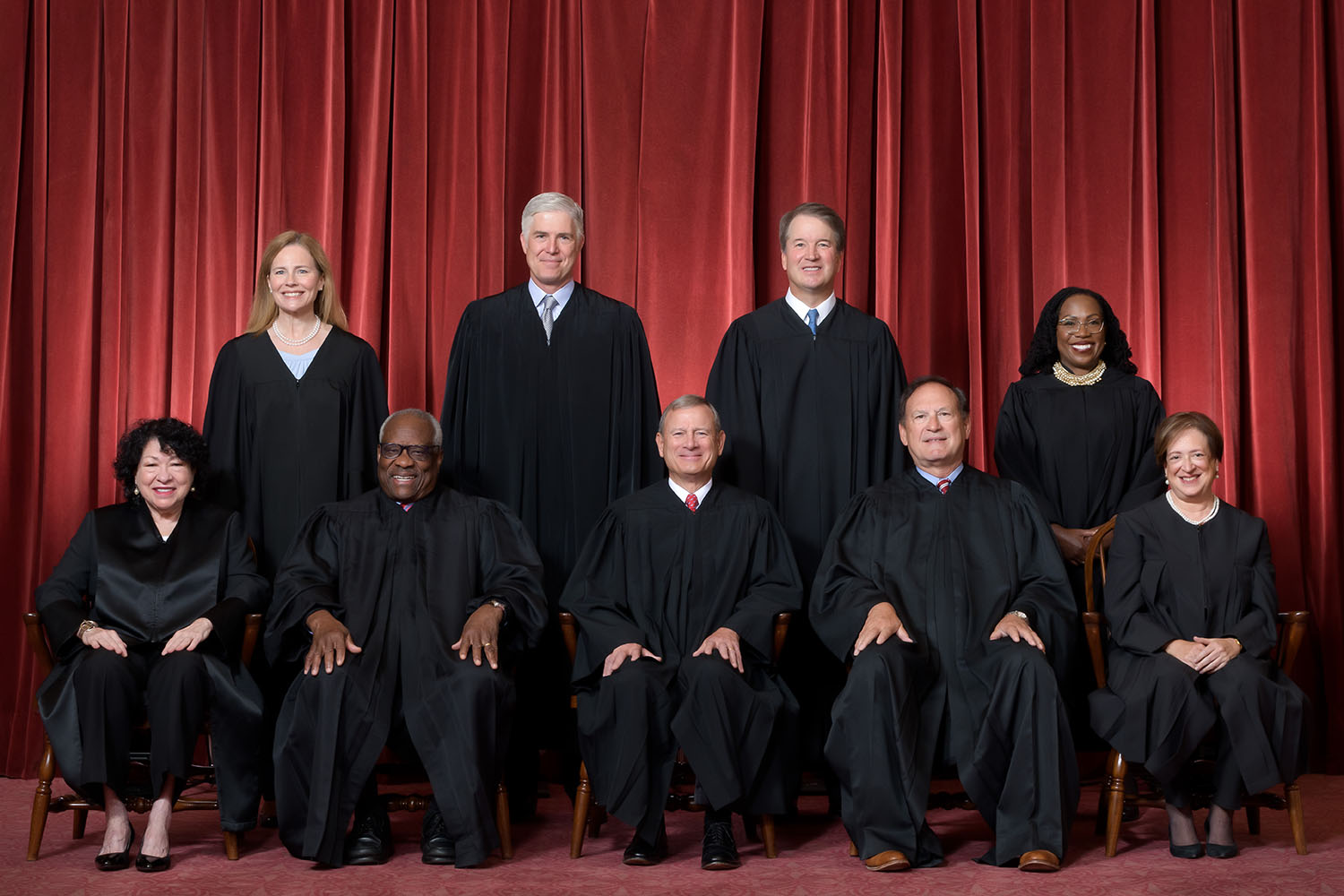
The Supreme Court is made up of nine justices. The current members of the Supreme Court are John G. Roberts Jr. (Chief Justice), Clarence Thomas (Associate Justice), Samuel A. Alito, Jr. (Associate Justice), Sonia Sotomayor (Associate Justice), Elena Kagan (Associate Justice), Neil M. Gorsuch, (Associate Justice), Brett M. Kavanaugh, (Associate Justice), Amy Coney Barrett, (Associate Justice), and Ketanji Brown Jackson, (Associate Justice). These justices are appointed by current and former presidents. There have only been 17 Chief Justices and 104 Associate Justices since the formation in 1790. 


Something I found interesting about the Supreme Court was that it receives around 7,000 cases annually and only accepts around 100 a year. I understand they can't accept all of these, but I feel that the Supreme Court could accept more than 100 cases per year. Something I did not know was that when the Supreme Court was formed, there were only 6 justices. I always thought it was an odd number, so the ruling could not be tied. Another thing I found interesting was that justices are appointed for life. I feel this is absurd because if you have justices who are all similar in age, I feel their perspectives may be the same. I think this may alter some decisions due to growing up in different time periods and may affect younger generations with their rulings. 


EOTO 2 Reactions

During the presentations for the EOTO 2 assignment, I learned a lot of new information. I found these to be the most interesting to me.  Whi...